CrisisCommons International Congress

Filed under: Uncategorized — Brian @ July 23, 2010 2:14 pm

In an event that saw online collaboration become face-to-face interaction, the first CrisisCommons International Congress took place in Washington DC last week. Representatives from 25 cities, 10 countries, and 5 continents gathered at the World Bank Headquarters to discuss the future of CrisisCommons, and CrisisCamps, the impromptu goodwill hackathons that popped up en masse following the earthquake Haiti.

Left Button’s Brian Chick was on hand to take part in shaping this organization, along with almost 70 others from all over the world. A combination of developers, coders, communications experts, disaster response professionals, doctors, and lawyers, were all part of the Congress, and all given a voice in trying to decide what direction the organization should take, and just how much of an organization there should be. This was a community based on openness, collaboration, sharing, and equality, so any sort of organizational hierarchy needed to respect that.

To all involved, the experience was described as incredible. Aside from the progress and discussion, the international collection of like-minded individuals was inspiring and motivational. Everyone left Washington with a renewed enthusiasm and is now working on making the strides set forth in the board room.

Net Change Week Indulges Shameless Plug

Filed under: Blogging, Web 2.0, Wikis, left button announcements — Brian @ June 10, 2010 2:59 pm

I was fortunate to inherit some tickets to a Net Change Week panel called “The Future of Web and the World” at the MaRS building. During the presentation, featuring Dr. Gerri Sinclain, Dr. Lucy Bernholz, and John Thackara, there was much discussion of Crisis Camps (mainly due to Dr. Bernholz). If you’re familiar with Left Button Solutions, you know that we’ve been involved as participants in CrisisCamp Toronto, and also as a sponsor, supplying coffee, snacks, and blog hosting.

Following the panel discussion, I was able to offer a plug for the Toronto group, and invited people to talk to me about the program, and how it works. I handed out a few business cards, all of which point here, so I wanted to list some of the resources people might want to check out for further information regarding Crisis Camps, and Crisis Commons.

  • CrisisCamp Toronto - our blog can be found here.
  • CrisisCommons (the organizing body) lives at CrisisCommons.org
  • CrisisCommons Wiki is where all the project, camp, and organizing information lives.
  • There are also Google Groups for CrisisCommons and CrisisCampTO but all major happenings will be blogged or tweeted.
  • Speaking of Twitter, you should follow: @CrisisCommons, @CrisisCampTO, @HeatherLeson,  and of course, @leftbutton


As stated in at the panel discussion, the next big thing for CrisisCommons is an upcoming international congress, happening in Washington DC in July. There, the group will develop some governance, some policy, and some direction to help refine the global effort that has mobilized more than 2,000 volunteers in more than 25 different cities.

Again, thank you all for indulding the shameless plug… feel free to contact me if you have any questions.

Left Button Presents…

Filed under: Web 2.0, left button announcements — Brian @ May 26, 2010 1:57 pm

On June 9th, Left Button Solutions will be offering a free session at Camaraderie Co-Working space in Toronto. It’s called “Social Media for Small Business” and is intended to be a crash course introduction to Facebook, Twitter, and some potential uses of these tools in a small business environment. For people who have yet to embrace these Web2.0 tools, this is a good place to start.

The event is being hosted by Camaraderie, a co-working space for small business and freelancers in Toronto. It is free to attend and there are 25 seats available.

To register, please visit this link: http://www.eventbrite.com/event/710565320

Hope to see you there!

Social Media Revolution

Filed under: Uncategorized — Brian @ May 7, 2010 2:26 pm

This is a new version of a video produced by Erik Qualman (@equalman on Twitter), author ofSocialnomics. It makes some interesting points about the popularity of social media, and what effects it has on businesses an marketing. At Left Button Solutions, we understand this ever-changing dynamic and want to help your business stay up-to-speed with your social media, and Web 2.0 initiatives.

Left Buttons teams up for “Curl for Haiti”

Filed under: Uncategorized — Brian @ March 14, 2010 4:05 pm

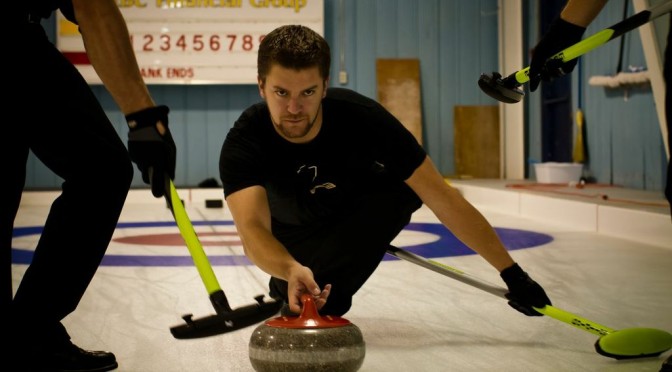
Anybody who knows me knows I love curling. Most of my nights in the fall/winter and many of my weekends are spent at curling clubs playing in leagues and tournaments. Recently, we decided to combine some our business, with some of our hobbies, to raise money for a worthy cause. Left Button Solutions teamed up with Rock Solid Productions to create “Curl for Haiti” a day-long event that invited experienced curlers and rookies alike to spend an afternoon curling, eating, and drinking.
Promoting the event using social media sites like Facebook and Twitter, we quickly filled the event to its maximum capacity of 80 people. All proceeds went to the Red Cross, to aid with their humanitarian and relief efforts helping Haiti Recover and rebuild following the earthquake (I should also note, there was a CrisisCamp meeting in Toronto on the same day to help offer technical help to volunteer organizations in Haiti and Chile).

Thanks to our sponsors at Wellington Brewery, we were able to raise more than $1,500 for the Red Cross. Thanks to everybody involved, and we hope we can run similar events in the future.

Left Button helps Haiti

Filed under: Blogging, Storage, Uncategorized, Wikis, left button announcements, youtube — Brian @ January 21, 2010 4:26 pm

Following the earthquakes that devastated Haiti, humanitarian aid is hugely necessary in the country. Not everybody has the money, the time, or the resources to fly down there to help offer medical attention, aid in the rescue efforts, or volunteer in some other capacity. CrisisCommons.org, however, has created opportunities for techie folks all over the world to pool their resources and volunteer efforts to create useful projects to help those in need.

Left Button Solutions has gotten on board with CrisisCamp - Toronto, the local chapter of CrisisCommons. So far LBS has built a blog to use as a central coordinating location, but in the future efforts could expand to a wiki, or other multimedia projects. LBS is happy to be on board, and grateful to CrisisCommons.org for making the opportunity to get involved so simple.

The Toronto group is headed by Heather Leson and plans to have their first meeting on January 24, 2010.

Merry Christmas, Happy Holidays, Joyous Winter

Filed under: Web 2.0, christmas, left button announcements — Brian @ December 25, 2009 1:02 pm

Left Button Solutions would like to wish you all the best this holiday season.  We hope your year was filled with joy, adventure, and prosperity, and that 2010 brings you just as much excitement. The holidays are a time for celebration and family, and to reflect on all the joy that is present in our lives.

2009 was a busy year for LBS. Aside from what felt like non-stop travel, our founder Brian Chick graduated from his Masters of Arts (Communications and Technology) program in November, and moved the company to a new office in December.  It’s been a bit of a whirlwind, but we’re excited to move forward as several new projects are looming on the horizon. 2010 looks to be another busy year.

Thank you to all our wonderful clients. We look forward to continuing our relationship into 2010 and beyond… and of course, if you have any friends who need some technical consulting, blog, wiki, web 2.0 work done, we’d be happy to help them out! ;)

Merry Christmas, Happy Holidays, and all the best in 2010!

What We Can Learn From the “Balloon Boy”

Filed under: Blogging, Web 2.0, youtube — Brian @ October 20, 2009 5:21 pm

Last week, millions of people across the U.S. and Canada were glued to the television watching a silver, flying saucer-shaped balloon sail through the Colorado skies, praying that the little boy inside could be rescued safely. Assuming, of course, that he actually WAS in the balloon like his family said.

While Wolf Blitzer was interviewing balloon experts and the family’s neighbours, the internet was a flurry of Tweets, Facebook Status updates, and blog posts wishing the boy, 6 year-old Falcon Heene, good luck and a safe return home. What struck me, however, was the number of posts about the child’s father, and how eccentric he was.

Many linked to articles about the family’s appearance on Wife Swap, others chose to focus on his “life on Mars” discovery and UFO hunting, while others noted that the family had an obvious, self-publicizing, YouTube presence (note - Since the incident most Heene family YouTube clips have been “removed by user”). Any article referencing Richard Heene indicated that he was a borderline mad scientist who loved any attention he could get. His MySpace page also gave off that impression (it has also since been removed).

Even before the balloon landed, I knew more about this family, and specifically their crazy father, than you’d think was possible. But what I had learned about him was nothing flattering; quite the opposite in fact. Aside from the quirks, many indications were that he was an absolute loud-mouth jerk. To be fair, his neighbour was interviewed on CNN and said he was a great guy… just “different.” Then again, his Wife-Swap appearances were already famous on the Internet for his temper, childish antics, and over the top reactions.

Long story short… I was pretty sure it was all a hoax before the balloon hit the ground. Why? Because the Internet was FILLED with information on how unbalanced this guy is. It seemed very obvious that he would be the kind of guy who would pull this kind of stunt. And sure enough I was right.

Balloon Boy Sr. was drumming up media attention so somebody might bite at their pitch for a reality show based on their family. All the hints were there… although having Balloon Boy himself out the conspiracy on national TV didn’t help me buy it either.

So what can we learn from this? Take a look at your own internet presence. What does it say about you? Spend an hour trying to find yourself in Google. Are the results accurate? Are they the messages you want to send? We’ve heard stories of criminals getting caught because of their Internet presence, and while we’d like to think we’re much smarter than that, it’s worth checking out how you might be sabotaging your own missions by what you leave lying around out there.

Takes some time and check out how you’re represented. Maybe spend a day tidying up your profiles on various websites. Take down some of the “less professional” photos that may be lingering on Facebook or those inane blog posts from a moodier time. If your name is on it, people will find it. If they do, make sure it tells them what you want it to.

Otherwise, you’re taking your chances… like a 6 year-old adrift in a homemade foil weather balloon flying saucer. (You can’t make this stuff up… oh wait… I guess you can.)

Two new attempts at Web 2.0

Filed under: Blogging, Web 2.0, youtube — Brian @ September 1, 2009 1:19 pm

I’ve decided to take a Web 2.0 approach to two recent undertakings. The two things are very different in nature, have little in common, but can be effectively addressed using Youtube, Blogs, Twitter, and Facebook.

#1) Teaching - People who know me are aware that I spend a good portion of my summer vacation coaching curling at various junior camps around the world. This year, I was in Fuessen, Germany for a World Curling Federation Camp, Halifax for a Curl Atlantic camp, and Guelph, ON for two weeks of the Ontario Curling Association camp.  These camps are like any summer camp with fun and games and minigolf and so on, only the main focus of each camp is to produce high level curlers. On the ice, and in the classroom, we teach lessons about various nuances of the game (depending on the level of the group, it could range from the basics of throwing a stone to the physics behind various angles).

For my group in Halifax this year, I had four teams (16 campers) of older kids (16-18). They all had cellphones and abused the internet all day everyday, so I figured I’d reach them in their own comfort zone. For every lesson we did on the ice, I had the campers recreate a short teaching video (shot simply on a digital camera) recapping the points they were taught. I posted this video to Youtube, then linked to it from our group blog, where we spent a few minutes of the next class session writing a summary. This modified learning journal, complete with photos, videos, and links went over very well and allowed them to access all this information from home, or from their curling clubs with their everyday coaches. Check that one out here: Whitecap’s Purple Group. The football pads were just for a goofy camp sketch contest.

#2) Awareness - Not long ago, I decided to ride in a fundraising effort called the Ride to Conquer Cancer. Aside from being physically prepared to ride my bike (which until recently had been covered with dust) 200 kilometers, I also set my goal to raise $3,200 as part of our team effort. Instead of just asking people for money, I decided to come up with a program that would involve them, and constantly remind them that I needed support for this cause. I created a blog called 200 Songs for 200 Klicks where I plan on posting 200 original performances of other people’s songs, dedicated to cancer survivors, victims, patients, and their families. Through Facebook and Twitter I can announce when new songs are up, hint that donations might be welcome, and remind people to visit the site.

Without asking anybody for money, I’ve already gotten donations from three different people, have requests from 18 people, and promises for each from many more. Using the power of Web 2.0 (a little more creatively than making my Twitter “STILL NEED DONATIONS FOR CANCER RIDE!!”), I’ve been able to solicit interest from a lot more people than would otherwise see. Check out 200 Songs here

Things I learned in Salt Lake City - Part 1

Filed under: Uncategorized, Web 2.0, left button announcements — Brian @ July 30, 2009 4:56 pm

Now that I’ve had a couple of days to reflect on my time in Utah, I figured it was a good idea to put some of those thoughts down in writing to make them feel more official. The ACLEA conference was a wonderful experience for me, as was the chance to present with my friend (and client) Jennifer Flynn. Our presentation on LESA’s wiki project was well received, although we got a bit sidetracked answering philosphical questions (”How does an author get credit in a wiki?” and “Wouldn’t it decrease the quality of your material?” etc.), so we didn’t actually get to showcase the actual technology that much.  I’m sure we could have gone on quite happily about wikis for several more hours if it hadn’t been lunch time.

I was fortunate to meet a variety of people in the Continuing Legal Education field and many of them were interested in the topic of wikis and other technology. It was wonderful to talk to a group so passionate about what they do, and willing to try new things to improve their existing methods of content delivery. Over the course of the weekend, there were several discussions involving Web 2.0, Facebook, Twitter, etc. and it made me aware of the huge gap between those who get it and those who don’t. I left with some ideas and over the next few days tried to put them into actual thoughts. And here’s one of them.

The Webcast Dilemma

Of the dozens of sessions, ACLEA was able to formally offer 7 of them as live webcasts. While most of us agreed that it was a nice thing if you couldn’t actually make it to the conference, there was some debate over whether it would ever be an adequate replacement for in-person seminars. And at dinner and over drinks, it was said again and again, “You don’t get this kind of networking experience from a webcast.” And I agree. Those who argue that webcasts are the seminars of the future, take a few minutes and think about these three points.

1) Nobody likes to sit at their computer watching fuzzy video. Your monitor is not a TV, and the seminar is not Entourage (or Dexter, Sopranos, Weeds, Grey’s Anatomy, Lost, etc… Take your pick). Television is entertaining and informative because it is written, produced, edited, vetted, colour-corrected, audio-adjusted, and formally packaged to look and sound great on your TV. Pointing a handi-cam at a speaker and a Powerpoint presentation in a poorly lit conference room isn’t quite the same.

2) These sessions are generally an hour or more in length. Think about any video you’ve watched on the internet. If it was produced with a handicam, webcam, or by any sort of non-TV/Film people, it was likely less than 10 minutes long. Think of the last thing you watched on the internet that was MORE than 10 minutes long… chances are, it was done by professionals. The point? If you’re convinced that you need to put your seminar online with limited staff and budget, keep it short. Either offer it in small pieces, or perhaps cut a highlight reel of some sort.

3) Don’t go live. Unless you’re a reporter at the scene of a major event, there is very rarely a compelling case to do a LIVE webcast. Sure, for important announcements or speeches, or if you decide that instant online feedback is required, you can hire somebody to shoot, encode, deliver, and generally manage your live webcast. If you think your viewers can wait 20 minutes to see the presentation, then other than shooting, that whole process can be done by our friends at YouTube or Vimeo for the low, low, price of… FREE. Speaking with the experience of eight years in live television production, I assure you it adds pressure you don’t need, variables you can’t always address, and the potential for disaster that can simply be avoided.

4) Finally, people don’t use the internet like they use a conference hall. You don’t sit down at the table with your binder of presentation materials and a coffee, and intently take notes. The internet is a different animal. People sitting at a computer will have the urge to click on things if you’re not keeping them riveted. So why not offer them some useful things to click on? Aside from your presentation material, offer some useful links and resources to complement the actual content of the session. So even if they aren’t paying attention to you, they’re at least taking in some of your message.

Older Posts »